“Have You Ever Wondered Why the Snow Leopard Is the ‘Ghost of the Mountains’? Is it really hard to see a snow leopard in the wild?

Mysteries of the Mountain Ghost: Snow Leopard Facts
- A mysterious master of camouflage, the snow leopard is one of the hardest animals to spot on Earth. It lives high in the cold, rugged mountains—hidden, silent, and unseen.
- It does not roar like other big cats. It yowls only during the mating season and moves like a ghost across rocky terrain and steep cliffs.
- In the wild and harsh landscapes of Central and South Asia, this cat survives not by fighting or showing off, but by disappearing—staying quiet, becoming a shadow, and blending into its surroundings.
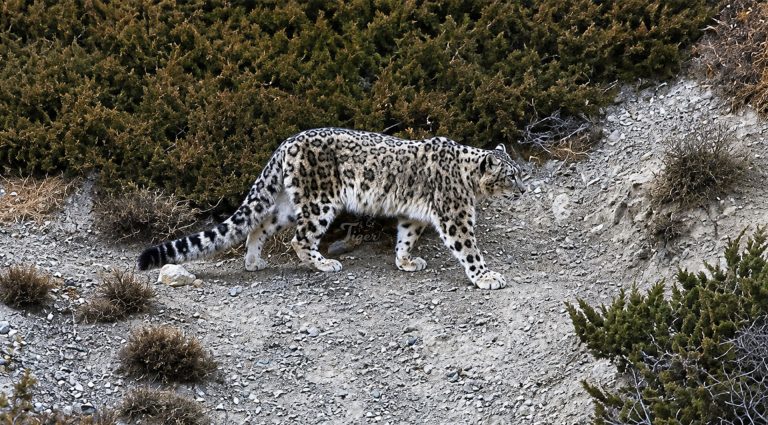
- Its thick fur, ranging from pale grey to whitish and dotted with rosettes and spots, allows it to vanish into snowy slopes and cliff faces.
- With a backdrop of grey, brown, and yellowish rocks, even trained eyes of experts struggle to distinguish the snow leopard from stone.
- It can remain still for hours, almost becoming unrecognizable from the rocks, show up out of nowhere and disappear like lightning.
- Unlike other predators, the snow leopard doesn’t chase prey from afar. Instead, it waits patiently and hidden in the rocky shade until the perfect moment to strike.
- Its wide, fur-covered paws act like snowshoes, allowing it to move silently across the snow. Even when it’s nearby, most will never notice it. Calm and cautious, it watches from a distance, undetected.
- Solitary and shy, the snow leopard is mostly active at dawn and dusk. It rarely crosses paths with people or even camera traps.

Local communities from the mountains regard snow leopards as the sacred spirits of their mountains. To them, these cats are more than animals. They are guardians of the mountains and the crucial creature in the ecosystem.
- Their presence signals the health of the mountains. As apex predators, snow leopards help maintain balance in high-altitude environments by regulating populations of prey such as blue sheep and ibex. This prevents overgrazing and protects fragile alpine ecosystems.
- For the Wakhi people, snow leopards are seen as mountain guardians—protectors of sacred headwater areas that feed entire river systems.
- In Tibetan Buddhist traditions, they are believed to possess spiritual power, safeguarding holy monasteries, peaks, and mountain passes. Monks and villagers often depict snow leopards in monastery art and include them in ceremonies to ensure ecological and spiritual harmony.
- In shamanic beliefs, they are spirit guides who move between worlds, maintaining the balance between nature and spirit.

Moreover, these deep-rooted cultural, spiritual, and ecological beliefs have played a significant role in protecting snow leopards from harm. Because they are revered as sacred beings, snow leopards are seldom harmed. As a result, this cultural respect and spiritual reverence have greatly contributed to their ongoing conservation in the wild.