Trip profileTiger Tracking Tour Chitwan 4 Nights/ 5 Days
ActivityWildlife Safari, Tiger Photography
Max. altitude152 to 183 meters (499 to 600 feet)
Best seasonMarch to May and September to November
AccommodationHotel in the city & luxury resort in the safari
MealsB,L, D
Start / end pointKathmandu - Bharatpur- Nawalparasi - Chitwan National Park
TransportationFlight, 4WD Private Jeep and Car
Age limitAbove 6
Itinerary of Tiger Tracking Tour in Chitwan
Accommodation4/5 star hotel at Thamel
TransportationFlight and 4WD Private Jeep
Maximum altitude1,350 meters/4,429 feet
Trek duration30 minutes drive
Trek distance5 km drive
MealsB,L,D
As you land in Nepal’s capital, you will be welcomed by our office representative in a typical Nepali style at the airport. Nepal is one of the most welcoming countries. Get ready to be overwhelmed by Nepalese hospitality. Following the completion of your paperwork and baggage collection, you will be transported to your preferred hotel or our recommended hotel in Thamel and then check in.
Once you’ve checked in, you’ll have time to freshen up while sipping a cold refreshment. Then, a briefing on the next day’s programs will be provided.
Just Fill and Book
This is a pre-booking form for the lead traveler. We would send you the actual booking form after the confirmation
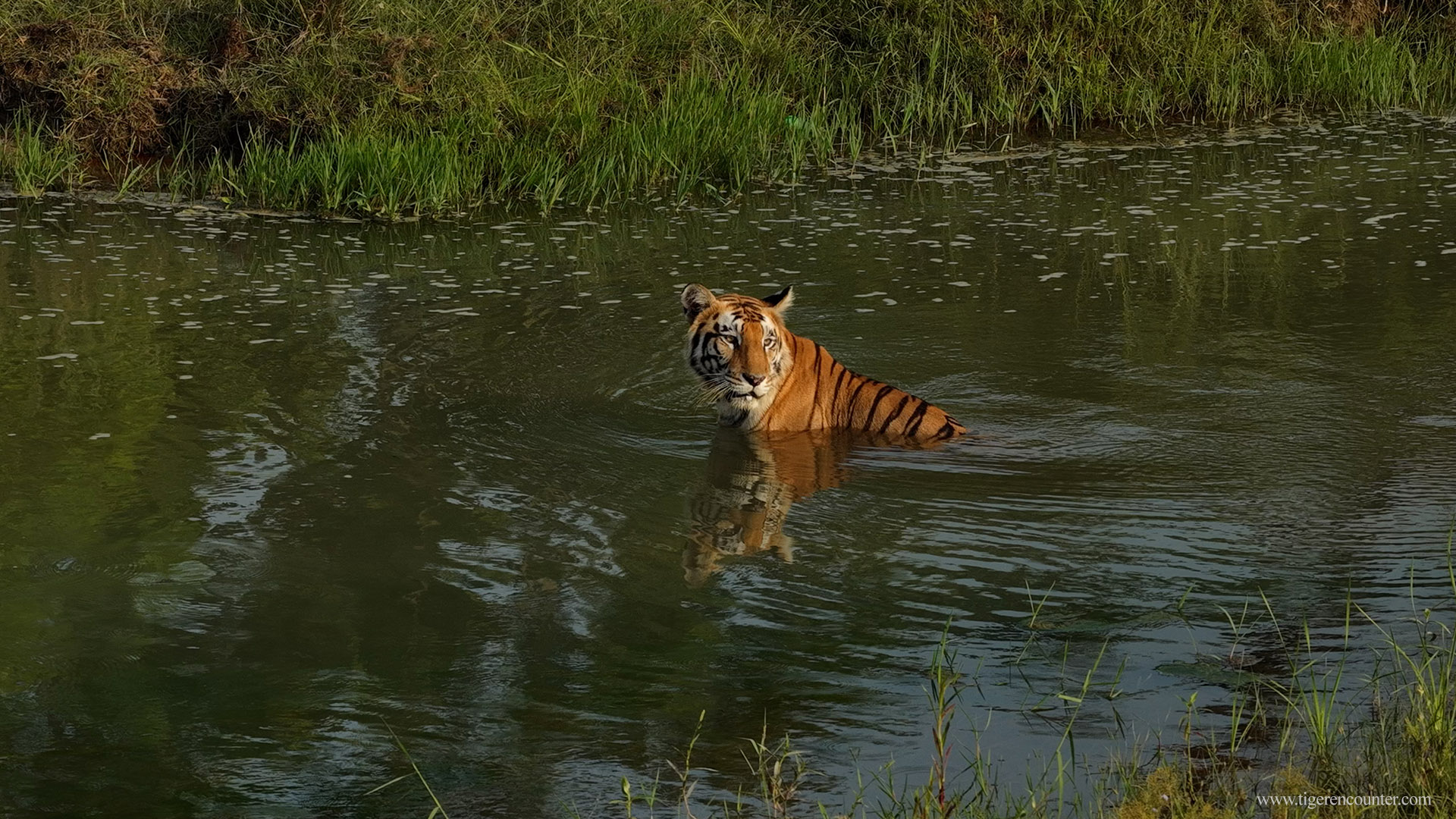
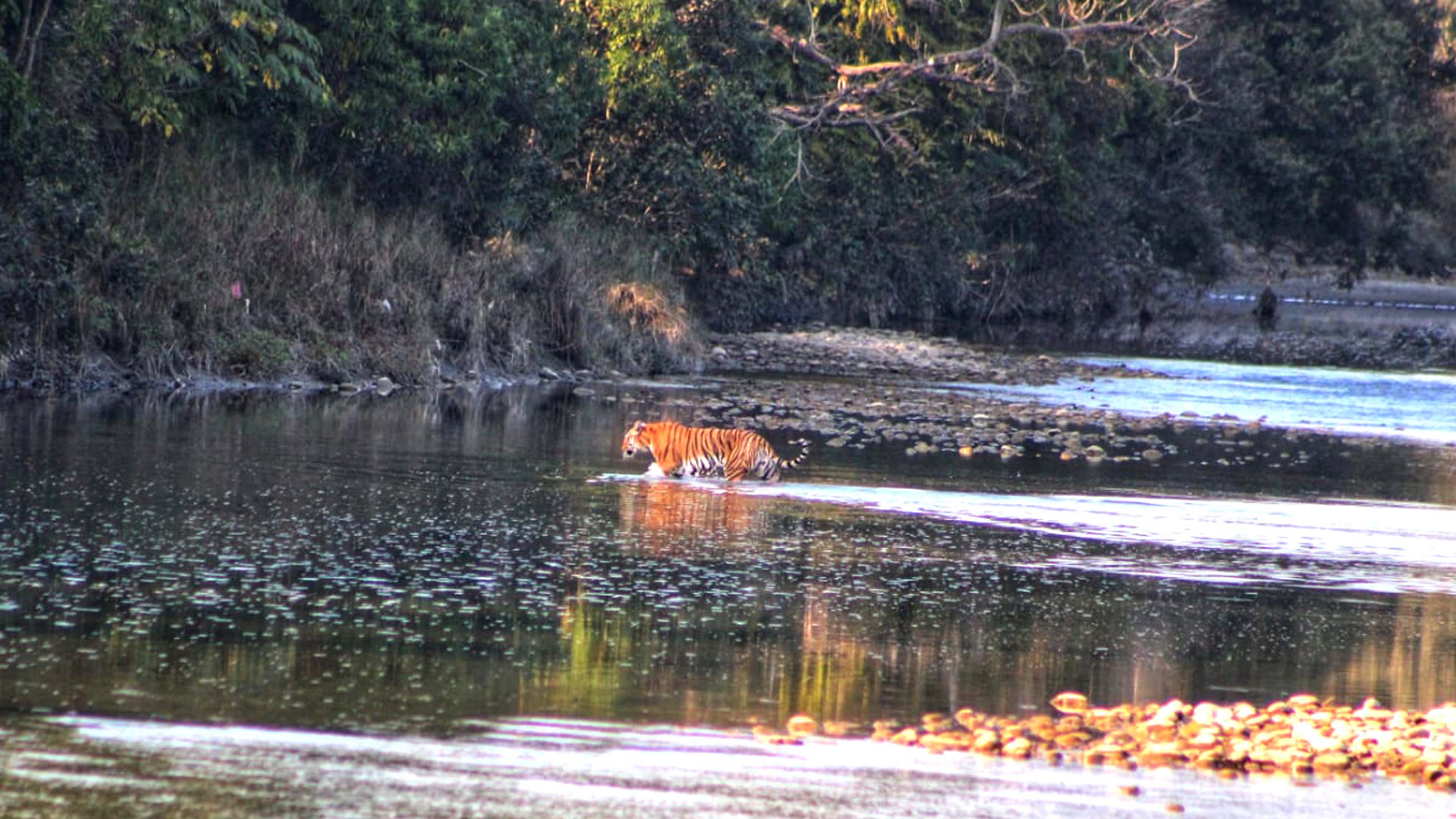
Come across the magnificent Royal Bengal Tigers, and watch them live their untamed lives. Experience this immense quest in the wilderness of the most undisturbed protected area in Nepal.
Embark on a wildlife journey to encounter the Royal Bengal Tiger in the oldest national park of Nepal
What your client say about us.
Wonderful and unforgettable trip!
My wife and I wanted to visit Nepal at its best, living, feeling and enjoying this beatiful country and people, in the most possible comfort, safety and relax..but, at the same time, we were not looking for a trip of unnecessary and impersonal luxury, living all the time in an unreal “bubble”. After some research, Tiger encounters was our choice for a 2 weeks trip to Nepal, one week between Karhmandu and Pokhara, and one week safari in Bardia National park.
Mr. Ghanshyam, owner and director of Tiger Encounters, organized for us the best possible tours and experiences. He suggested and booked the proper premium hotels and lodges, visited the best places with top guides, fantastic choices! From the moment of booking the trip, until the very last minute before boarding our plane to come home, we always had a full and great support. Everything was seamless, spotless and perfect. We lived the best of the Himalaya and the wilderness of Bardia beeing always treated like royals, unbelievable !
Thank you very much for all the special moments we lived and enjoyed, we will come again for sure !
Dear Reader, if you are still here, means that you really wish to go to Nepal… in that case, do not hesitate any longer, contact Tiger Encounters right now, you will not regreat it !!!!
Nicola & MariaItaly
Snow Leopard Expedition in Nepal
I have to congratulate Ghanshyam on the great organization, from email communications, logistics and all the attention during the tour. Everything was organized in an excellent way and what I really appreciated was the availability and flexibility. I have travelled a lot, but few times have I met an agency so helpful to plan changes on site. Great drivers, careful driving.
Aashish, our guide, did everything to satisfy every request, always available and kind throughout the trip and very competent even during trekking in search of the Leopard. What about Tashi R. Ghale, a special person, tireless, did everything so that we could realize the dream of sighting the Leopard. It was an honor to meet him and be able to be with him, for me it was one of the best experiences of life. I would have hoped to see the Leopard more closely, but I realize how difficult it is and still being able to hear it during the calls of the mating season was exciting.
Thank you for everything and I can only recommend this agency “Tiger Encounter”!
Alessandra FarinaItaly
The most exciting journey of Snow Leopard and the most perfect service!
Together with Tiger Encounter we went to Nepal in the Annapurna National Park on the trail of the Snow Leopard and it was a magical experience where everything went smoothly. Organizing the trip of a lifetime is a wonderful challenge, but doing it with passionate, competent, and meticulous people who paid attention to every detail and our every wish, ensuring this was truly the trip of a lifetime, was truly fantastic! We were three of us along with me Alessan & Sandara.
These people really exist: they are the Tìger Encounter team.
Professionalism at the highest level, friendliness and respect, always open to any idea and always attentive to our safety.
You couldn’t ask for more.
Alberto CerioniReppubblica Italiana
One of the best tour companies I ever worked with
I’ve travelled to 50+ countries with dozens of tour operators – Ghanshyam and his team absolutely stood out. This was a demanding photography trip and everything was organised perfectly and flexibly when needed, with a lot of personal attention and excellent guides.
Florian KriechbaumerDubai
Bardia and Chitwan Photography Trip
I have traveled to many places in pursuit of photographing endangered species, and surprisingly, I did not have any images of the Bengal tiger. Many of my friends visited India for tiger safaris, but the crowded and hectic national parks discouraged me. After watching a BBC Planet Earth documentary, I discovered that Bengal tigers also exist in Nepal. Following many email exchanges with different tour operators in Nepal, I chose Tiger Encounter — and I am very happy that I made the right decision.
Ghanshyam was extremely flexible with my itinerary. I had to change my plans at least twice, and he accommodated every adjustment without hesitation or even a hint of frustration. He personally came to the airport to receive me and introduced me to my guide, Manju, who accompanied me throughout the entire trip. During the journey, Ghanshyam stayed in constant communication with the guide to ensure I was always well taken care of.
When I book a trip, I highly value creativity, resourcefulness, and flexibility. Not every trip goes perfectly smoothly, so when unexpected situations arise, the way they are handled matters greatly. Ghanshyam earned my trust because he managed every challenge in a way that exceeded my expectations.
Although I had to cut my trip short, I fully intend to return to Nepal, and Ghanshyam will absolutely be my first choice again.
With that said, I have no hesitation in highly recommending Tiger Encounter to anyone planning a trip to Nepal.
Ly DangUSA
Tiger Trip of a lifetime!
I spent 12 days exploring Nepal with Tiger Encounter and it was one of the most incredible trips in my life. They met us at the airport and didn’t leave our side the entire trip. Extremely organized and professional and I’m already planning on coming back. Best way to see tigers in the wild! Couldn’t recommend them enough.
Ryan ShirleyUSA
Tiger Safari in Bardia & Red Panda Trekking
I really wanted to find a local company who could make a personalised itinerary for my husband and I to do red panda trekking and a safari in Bardia National Park to see tigers (among other things). I would highly recommend Tiger Encounter for any trip to Nepal, but especially if you’re looking to encounter wildlife.
Ria & PeterNew Zealand
Outstanding Service
We recently returned from a 2 week private wildlife trekking and safari tour with Tiger Encounter, and couldn’t recommend them highly enough. We found them through a Google search and we are so glad that we did – we were so impressed! Tiger Encounter really offer such a personalised service and clearly care about their travellers.
Jessica & JamesUnited Kingdom
Great Experience with Tiger Encounter
Excellent safari in Chitwan and Bardia. Very professional company and we were looked after really well. Communication was easy and fast response. The guides on the safaris were brilliant and the accommodation was excellent. Can’t rate them highly enough.
Susan Joy BrownUnited Kingdom
The absolute best there is
I’ve been to 28 different countries and countless safaris over the world- let me tell you that this is the standard for every other safari I’ve been on since! The attention to detail, the absolute love and care of the guides, and the tour operator’s genuine wish for you to have the best experience possible made this one of the most amazing tours/safaris I’ve been on.
It was just as amazing to meet the locals and meet the Tharu people as it was to see the rhino and to be close up with an elephant!! (And That tiger that kept in front of our raft to cross the river!!) As an experienced traveler, take my word that you will have a genuinely wild and carefree adventure!!!???
Alison Michell HancockUSA
First Luxuries Jungle Safari Trip to Nepal
Had the most wonderful and life changing experience with Tiger Encounter. I had the wonderful opportunity to meet Mr. Sharma (owner) who had accompanied me as my guide throughout my adventure. They had planned everything so well and truly make you feel like family. Be it every step of the way from jeep safari, jungle walk, canoe ride, trek through the jungle, mountain trek Mr. Sharma is truly amazing guide, photographer and wonderful motivator. It goes without saying that your guide is your doorway to experiencing everything about the beautiful country you visit. Be it food, shopping, adventure or pleasure. I truly loved every moment of my time…and hope to return to this beautiful country with Tiger Encounter to many more adventures and celebrating a wonderful friendship. Hop you all have as amazing adventures and journeys with them. ?
Chithra SashiBahrain
Fantastic from beginning to end
Thank you Tiger Encounter team for another great experience in beautiful Nepal. We had amazing memories in Mt. Everest & Chitwan! We did wildlife safari, jeep safari, bird watching, village tour & cultural program. You are super professional, knowledgeable. Strongly recommend.