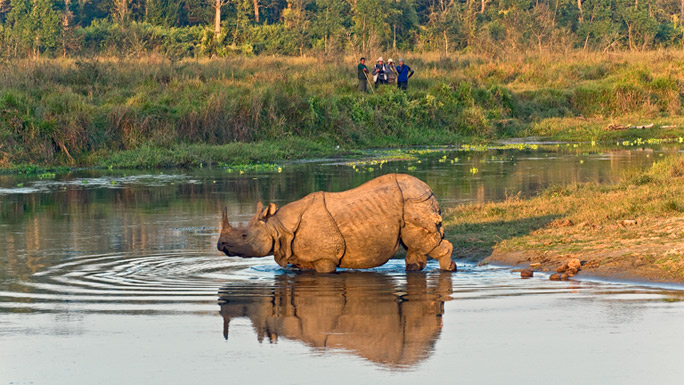
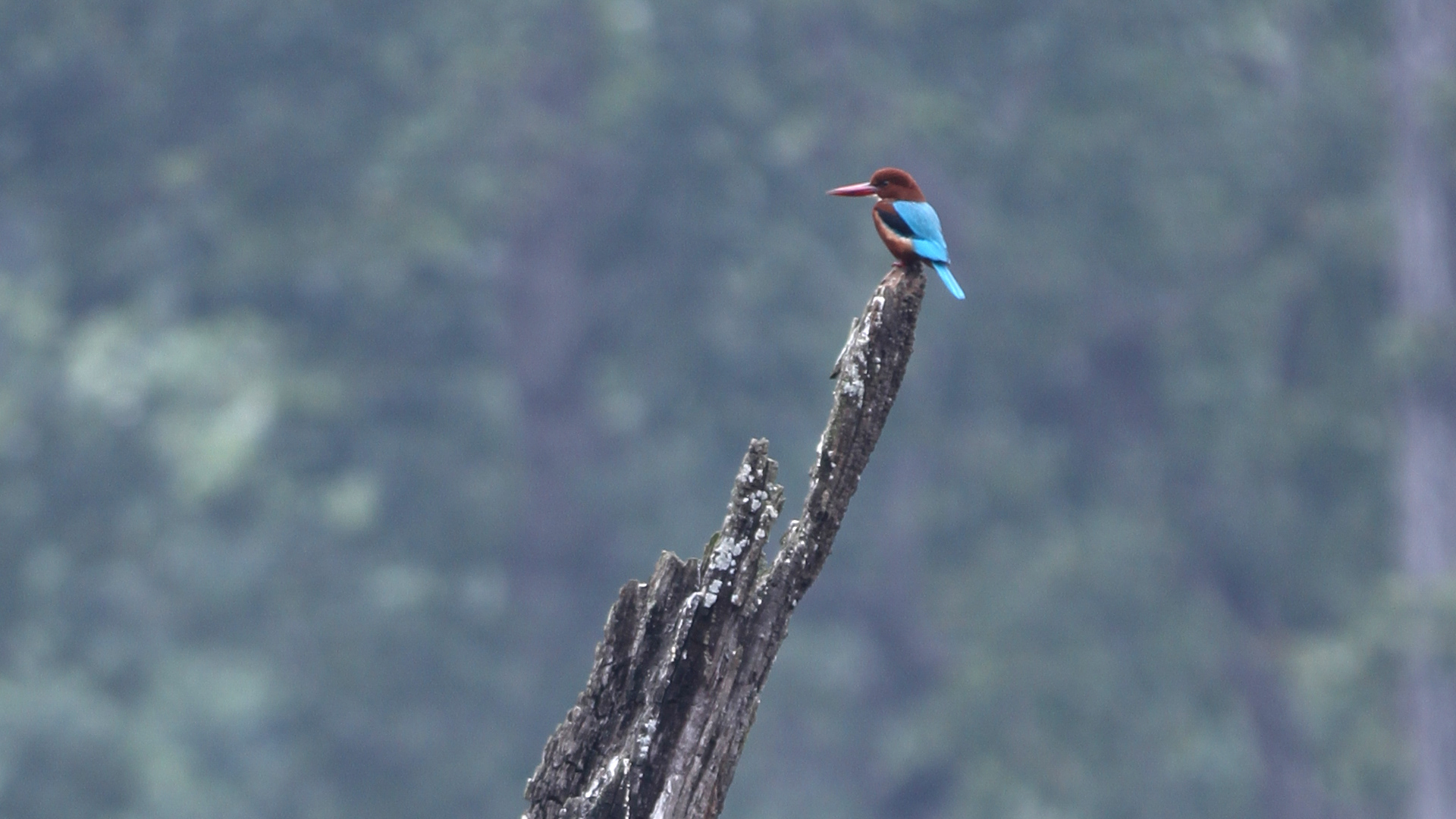
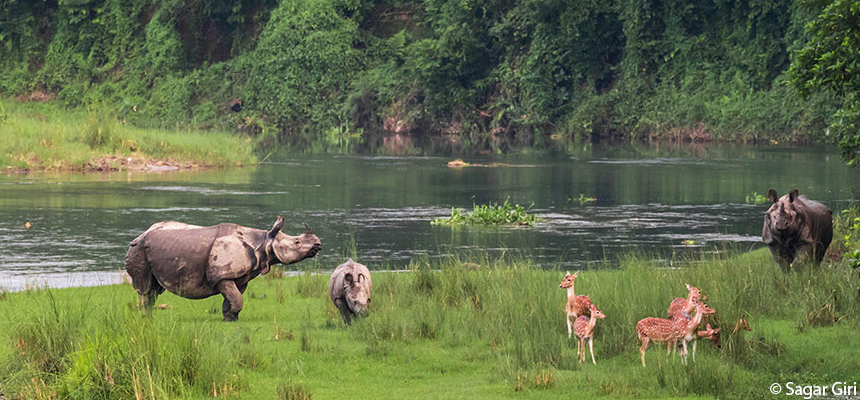
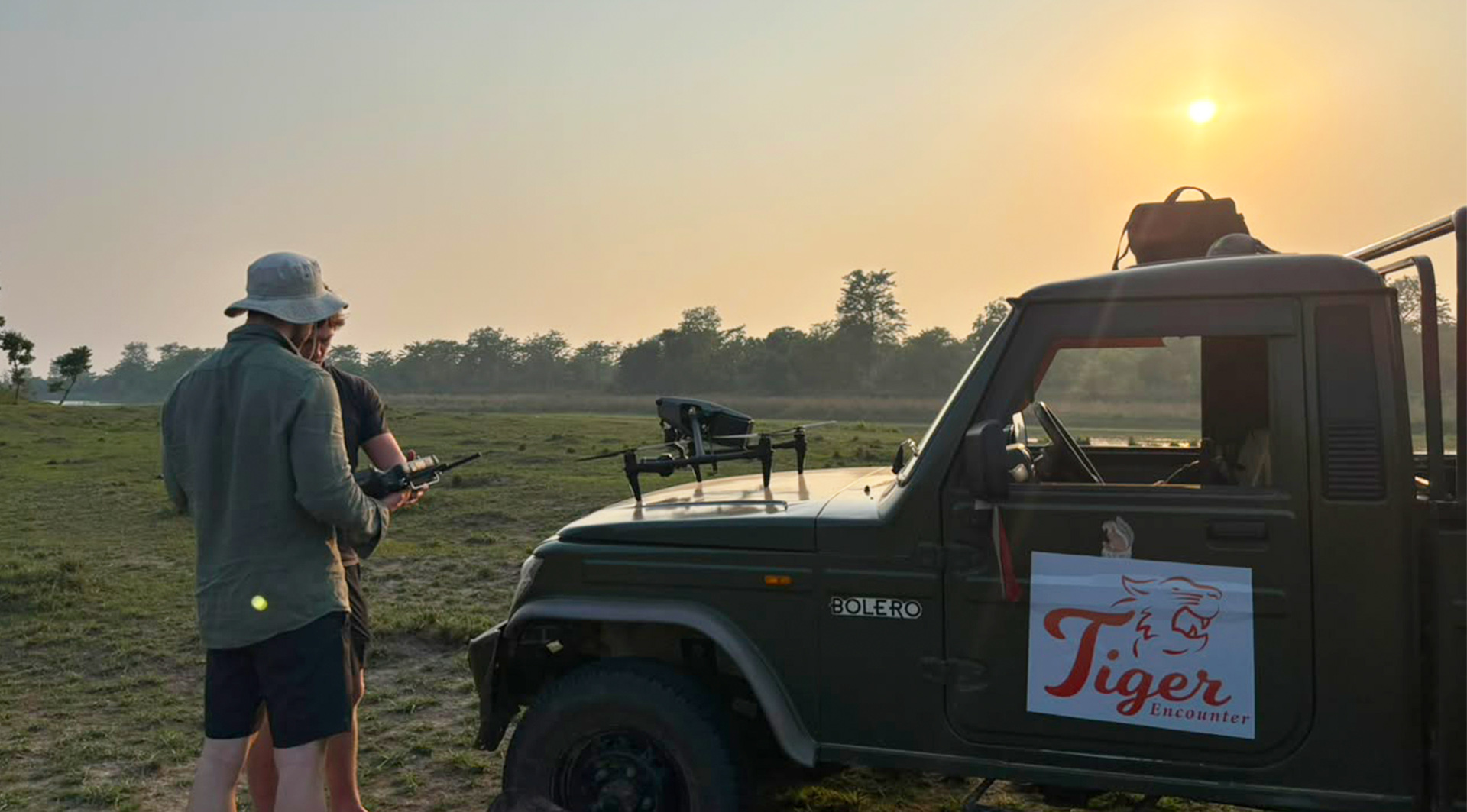
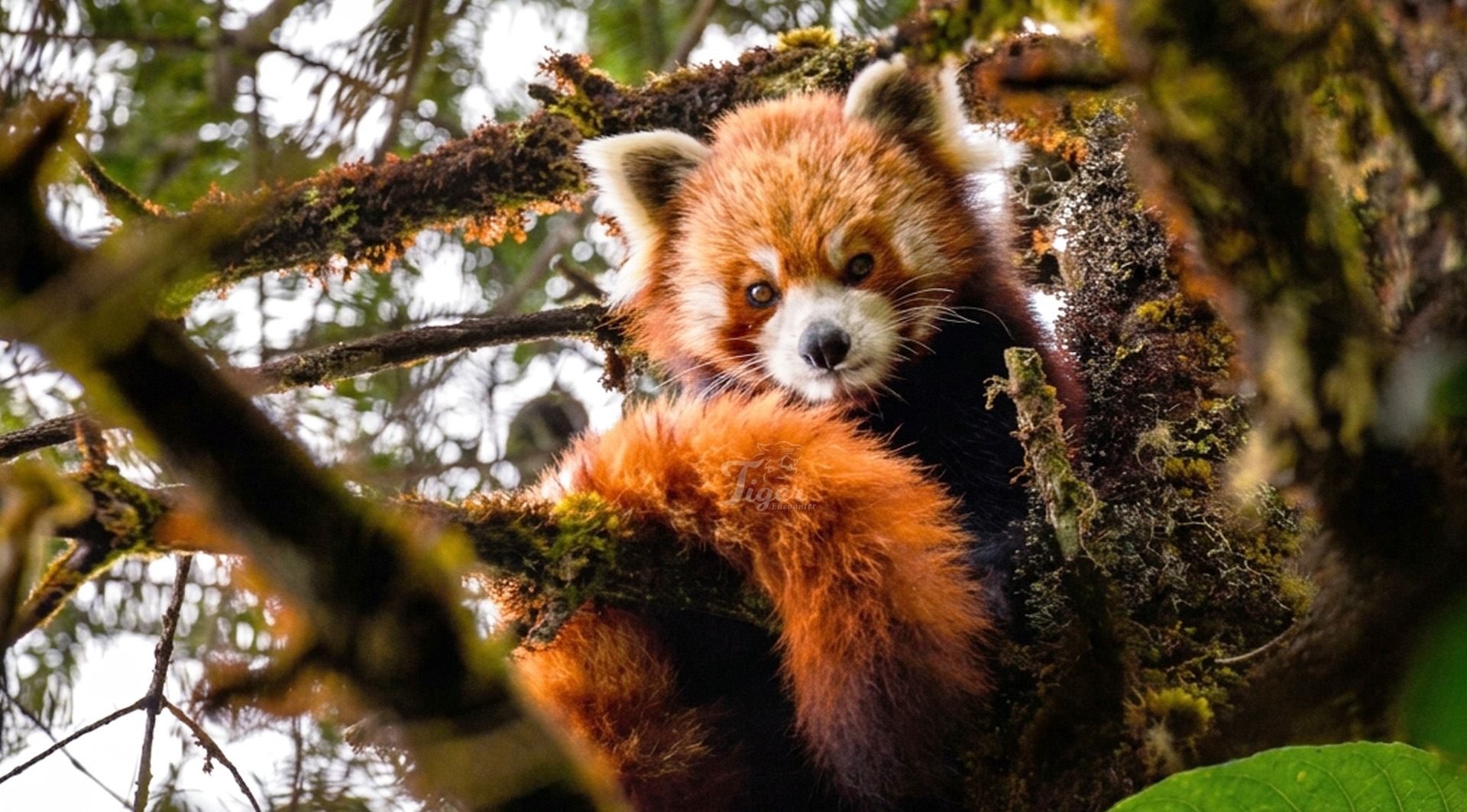
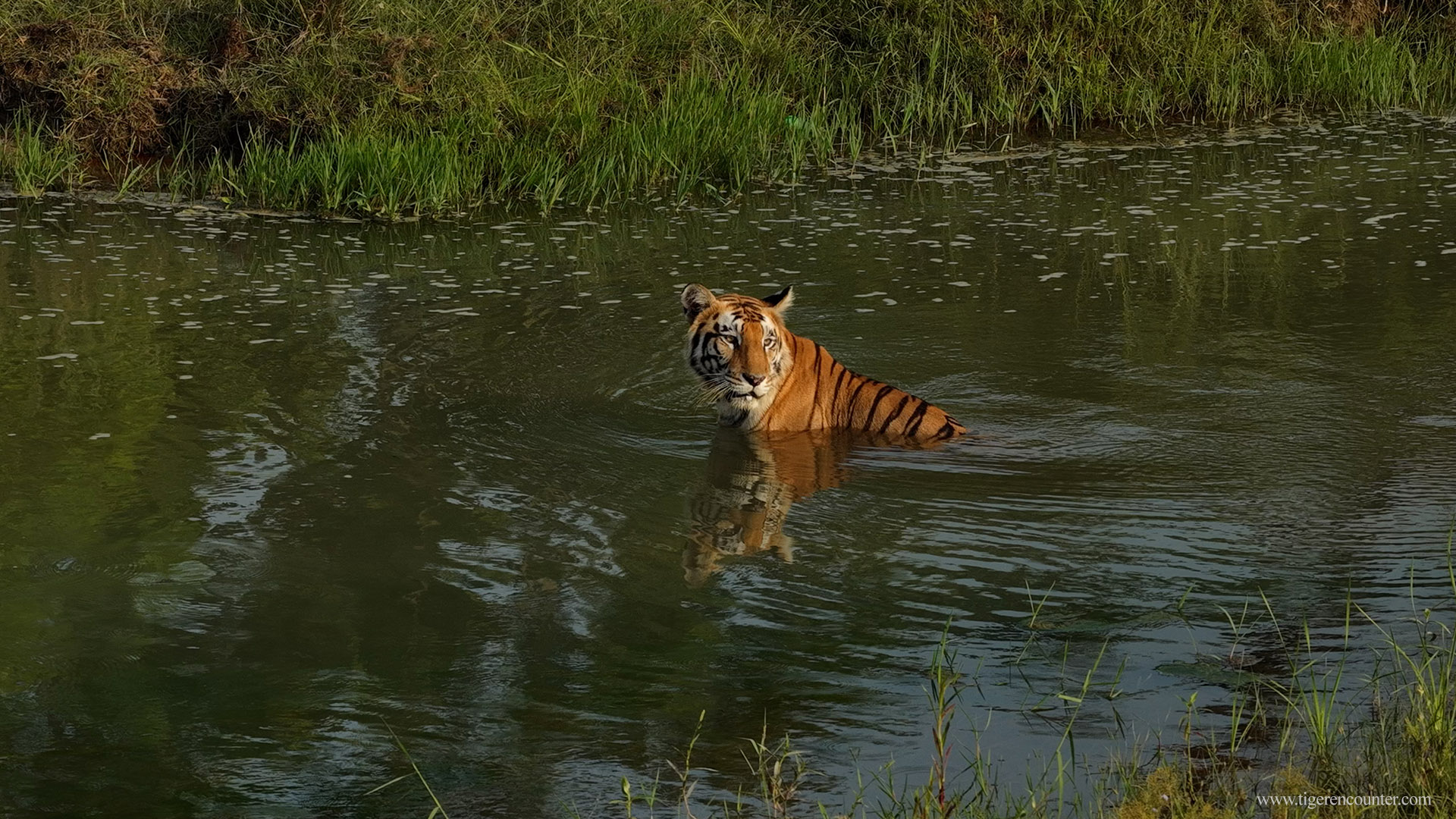
Jeep Safari with Breakfast in the jungle: Duration – Approx 4-5 Hours: Proceed for the Jeep Safari crossing the Rapti River by Patela Boat to start with from Bhimle army check post. There are two choices of routes available, which our naturalists pick based on their experience with current sightings and animal movement.
Route 1: Bhimle post – Sukhibhar post towards Kasara (park headquarters)
Route 2: Bhimle post – Reu River- Surung Khola
Route 3: Bhimle Post – Reu River- towards Khoria Muhan Post
Breakfast will be served in between the safari in a scenic and safe spot chosen by the Naturalist. After the safari, leisure time to relax by the pool or use Spa Facilities till lunchtime.
Walking safari inside the National Park:
After Lunch proceeds towards the Rapti River, just in front of our resort, at a Boat put-in point, and cross the river on a patela boat. After crossing the river, start a Nature Walk inside Chitwan National Park to explore the different oxbow lakes (Devi Tal, Munda Tal, Lamo Tal, and Kamal Tal) to view the Marsh Mugger and different mammals, aquatic and other bird species. Duration – Approx -3-4 Hours
Back to the lodge and relax by the pool for the rest of the late afternoon or use the spa/couple massage room facility at the lodge. Tharu Cultural Dance: Tharu Cultural Dance: Farmers of the nearby villages will show some of their traditional skills and dances. Dinner at the resort.