Red Panda in Nepal: The Shy Flame of the Himalayas
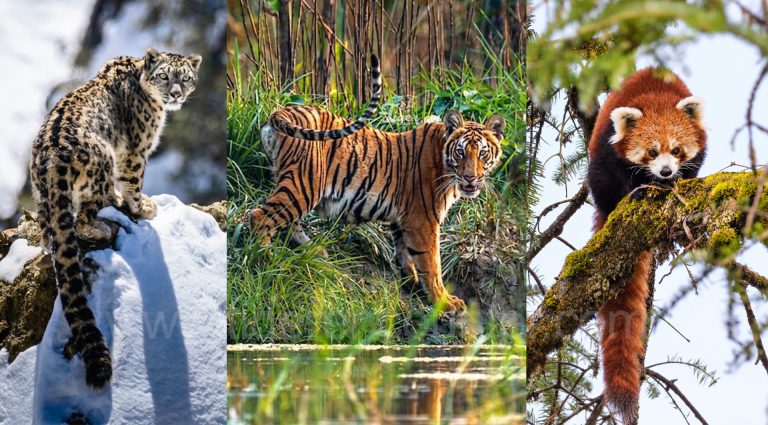
Hidden among the misty forests of the Himalayas lives one of nature’s most charming yet mysterious creatures — the Red Panda (Ailurus fulgens). Known locally as Habre in Nepali, this small, tree-dwelling mammal is as elusive as it is captivating. With its fiery red fur, ringed tail, and gentle face, the red panda symbolizes the untouched beauty of Nepal’s mountain wilderness.
Red Panda Habitat in Nepal
Nepal provides one of the most vital habitats for the global red panda population. Nearly 25% of the world’s remaining red pandas are found within Nepal’s lush, temperate forests that stretch between 2,200 and 4,800 meters in altitude.
Red pandas thrive in mixed deciduous and coniferous forests where bamboo, moss, and lichens grow abundantly. Additionally, they prefer areas with dense canopy cover and cool, moist climates, typical of the Himalayan foothills.

Key Red Panda Habitats in Nepal:
- Langtang National Park
- Home to roughly a quarter of Nepal’s red panda population.
- Easily accessible from Kathmandu (just 120 km away).
- Offers both trekking and conservation-based travel opportunities.
- Kanchenjunga Conservation Area
- A remote eastern region, rich in biodiversity.
- Important for red panda corridor connectivity with India’s Singalila National Park.
- Makalu Barun National Park
- Rugged and pristine, known for old-growth forests and minimal human interference.
- Rara and Jumla Regions (Western Nepal)
- Recent research and camera traps have confirmed red panda presence here, expanding their known range.
- Ilam and Panchthar Districts (Community Forests)
- These community-led conservation zones are becoming red panda strongholds because of the local involvement and eco-tourism.
Ecology and Behavior
Although called a “panda,” the red panda is not closely related to the giant panda. It belongs to its own unique family, Ailuridae, making it a living fossil — a species with no close relatives alive today.
Physical Features:
- Size: Similar to a domestic cat (around 50–60 cm body length, tail 30–50 cm).
- Weight: 3–6 kilograms.
- Color: Reddish-orange fur with white facial markings and ringed tails for camouflage among mossy trees.
Lifestyle:
- Diet: Primarily bamboo shoots and leaves (up to 95%); however, they also eat berries, acorns, insects, and occasionally bird eggs.
- Behavior: Solitary, crepuscular (active at dawn and dusk), and arboreal (tree-dwelling).
- Adaptation: Thick fur and semi-retractable claws for climbing; tail used for balance and warmth.
In winter, they curl up with their tails wrapped around their body to stay warm — a sight that makes them look like fiery balls of fur sleeping in the snow-covered forest.

Threats to Red Panda Survival
Despite their enchanting appearance, red pandas face numerous threats in Nepal:
- Habitat Loss & Fragmentation
Expanding agriculture, logging, and livestock grazing have reduced forest connectivity. - Poaching & Illegal Trade
Red pandas are sometimes hunted for their pelts or captured for the illegal pet trade. - Livestock & Dog Attacks
Free-ranging dogs in rural areas pose a major risk to both red pandas and their young. - Climate Change
Shifting weather patterns and temperature changes affect bamboo growth-their main food source.
As a result, red pandas are listed as Endangered by the IUCN. Nepal’s red panda population is estimated to be fewer than 1,000 individuals, scattered across the mid- to high-Himalayan forests.
Conservation Efforts in Nepal
Through collaboration between the government, NGOs, and local communities, several strong initiatives are underway to protect this Himalayan treasure. Despite the challenges, Nepal has made remarkable strides in red panda conservation.
Major Initiatives:
- Red Panda Network (RPN):
A leading organization dedicated to red panda conservation through community forests, eco-tourism, and education. - Community-Based Monitoring:
Local “Forest Guardians” are trained to track red panda signs, monitor bamboo health, and report illegal activities. - Habitat Connectivity Projects:
Establishing wildlife corridors that link isolated panda populations for genetic diversity. - Eco-tourism and Awareness:
Red panda tracking treks and village homestays encourage sustainable tourism and provide alternative livelihoods.
By empowering local people to protect their forests, Nepal has shown that conservation and community welfare can go hand in hand.
Cultural and Ecological Significance
In Himalayan culture, the red panda is a symbol of balance and peace, often associated with harmony between humans and nature.
Ecologically, red pandas play an important role in maintaining forest health by dispersing seeds and maintaining bamboo ecosystems, which are vital for many other species.
Protecting red pandas, therefore, helps safeguard entire forest landscapes that support countless species and human communities.

Experience the Wild with Tiger Encounter
Join Tiger Encounter for a once-in-a-lifetime Red Panda Tracking Adventure in Nepal’s Himalayan forests. Walk through rhododendron valleys, encounter diverse wildlife, and stay in warm mountain homestays. By joining, you support conservation, empower communities, and experience the magic of one of the world’s rarest animals.
Your adventure helps conservation. Your presence supports communities.
Plan your Red Panda Trek today at www.tigerencounter.com
Red Panda Tracking Treks
For wildlife lovers, joining a Red Panda Tracking Trek is one of Nepal’s most unique experiences. Not only do these treks provide incredible wildlife encounters, but also they directly support conservation and local livelihoods.
Trek Highlights:
- Destination: Langtang National Park or Eastern Nepal (Ilam region)
- Duration: 7–10 days
- Difficulty: Moderate (suitable for nature enthusiasts and photographers)
- Best Season: March–May (spring bloom) and October–December (clear skies)
- Activities: Wildlife tracking, birdwatching, community homestays, conservation interaction
Accompanied by expert local guides, you’ll learn to recognize red panda droppings, feeding marks on bamboo, and claw scratches on trees — the subtle signs of their hidden presence.
Blog and Photos by: Lhakpa Gyalbu (the local red panda tracker and wildlife photographer from Langtang)