The clouded leopard (Neofelis nebulosa) is one of the most mysterious wild cats in Nepal. Indeed, it is very elusive and is often called a “ghost of the forest.” Locally, it is known as dhwase chituwa, which translates to “smoky leopard” due to its distinctive coat. Moreover, this medium-sized cat is classified as vulnerable on the IUCN Red List. Its fur has cloud-like patterns that help it blend into dense forests. Because of this camouflage, sightings are rare and treasured.
Most clouded leopard sightings are confirmed through camera traps. The species has been recorded in several protected areas, including Langtang National Park (at elevations around 3,500 meters), Annapurna Conservation Area, Chitwan National Park, Makalu-Barun, Kanchenjunga Conservation Area, and Shivapuri-Nagarjun National Park.
Clouded leopards prefer dense subtropical and temperate forests. They also inhabit rugged terrain with cliffs, ridges, and gullies. Being primarily nocturnal and highly secretive, direct sightings are extremely rare—even for researchers.
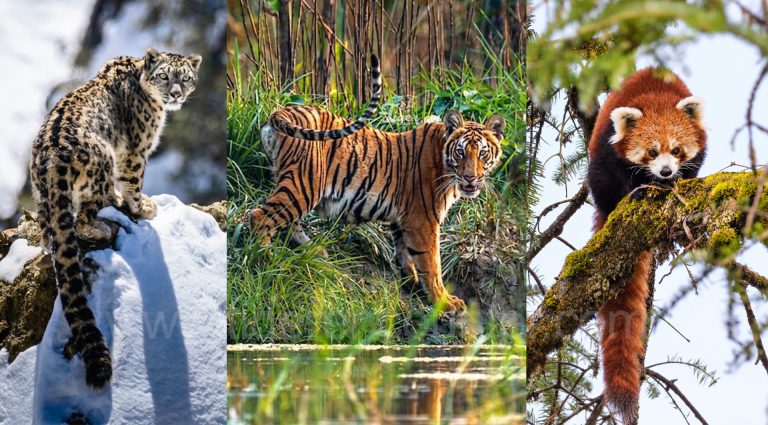
For wildlife lovers and photographers, spotting a clouded leopard in Nepal is a rare and unforgettable experience. Planning a clouded leopard expedition in Nepal is ambitious because this species is extremely elusive. Unlike tigers, snow leopards, or red pandas, there are no commercial tours that can guarantee sightings. However, it is possible to maximize your chances. Choosing the right protected areas, using camera traps, joining guided wildlife tracking, and allowing enough time are key strategies.
Nepal marks the westernmost edge of the clouded leopard’s range. It lives in the Chitwan-Annapurna Landscape and other parts of the country, from the Himalayan foothills to eastern regions. The species was first captured on a camera trap in 2010 at Shivapuri Nagarjun National Park in the Kathmandu Valley. This was a significant milestone for wildlife research in Nepal. Researchers have recorded clouded leopards farther east in Langtang, Makalu–Barun, Kanchenjunga, and Chitwan-Annapurna since then
Clouded leopards prefer dense forests. These areas provide cover for hunting and moving around. Nepal’s landscapes vary from subtropical lowlands to temperate forests. These habitats are ideal for these nocturnal predators.
Behavior and Characteristics
Clouded leopards are solitary and mostly active at night. In addition, they are excellent climbers and can descend trees headfirst, a rare skill among cats. They are carnivorous and eat birds, monkeys, and small deer. Despite being smaller than tigers or leopards, their long canines and muscular build make them effective hunters.
Research and Conservation Efforts
Even in Nepal, clouded leopards are hard to study. Researchers focusing on them are even rarer. Yadav Ghimirey, a Ph.D. candidate at the University of Florida, is one of the pioneering scientists studying them in Nepal. In a recent interview with Mongabay’s Abhaya Raj Joshi, he discussed the challenges of studying clouded leopards. The cats’ elusive nature and Nepal’s rugged terrain make monitoring difficult.
Conservation is very important for this species. Threats include habitat loss, poaching, and human-wildlife conflict. Protecting forests, enforcing anti-poaching laws, and raising awareness are key to ensuring their survival. These steps are vital both in Nepal and across Asia.
Why Clouded Leopards Matter
Clouded leopards help maintain forest ecosystems. As apex predators, they control prey populations, which supports biodiversity. Their presence also indicates healthy forests. Thriving populations mean well-preserved habitats.