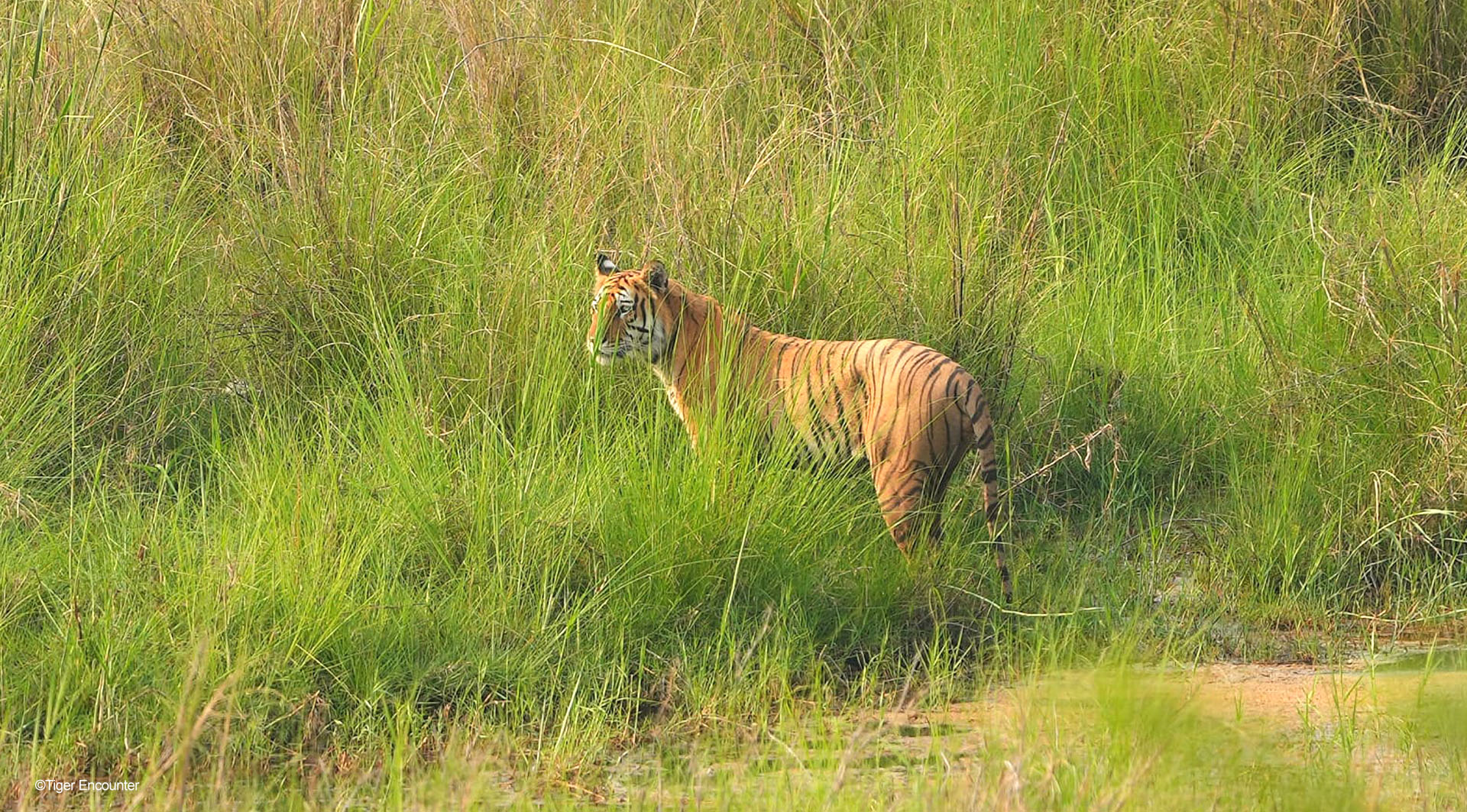
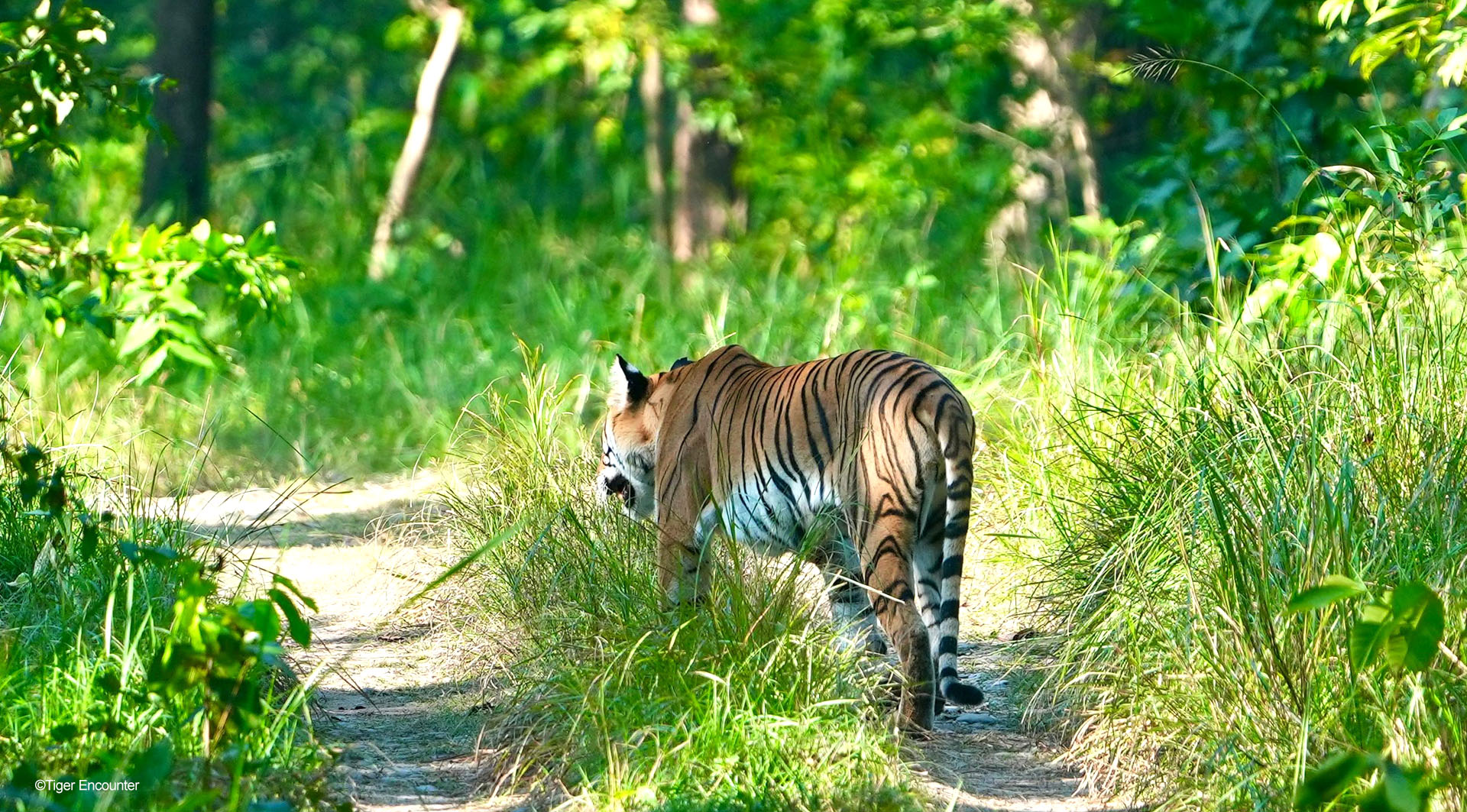
Bardia National Park is Nepal's premier destination for tiger tracking and one of the finest places in Asia to experience the wild. Together with the adjoining protected forests of Banke National Park, it forms one of the largest tiger conservation landscapes in the world, supporting a thriving population of over 112 adult Royal Bengal Tigers in Bardia alone.
What makes Bardia special is its vast wilderness, lower visitor numbers, and exceptional opportunities for authentic tiger encounters. Our expert local guides and trackers know the park's most productive tiger territories and regularly monitor signs such as fresh pugmarks, alarm calls, and recent sightings to maximize your chances of finding a tiger.
The best time for tiger tracking in Bardia National Park is from February to May, with April being the prime month due to dry conditions and excellent wildlife visibility. Tiger sightings are also highly rewarding from October to December, when pleasant weather and active wildlife create outstanding safari opportunities. While sightings are possible throughout much of the year, these periods offer the best chances for tiger encounters, wildlife viewing, and photography.
Tiger Encounter in Bardia Major Activities
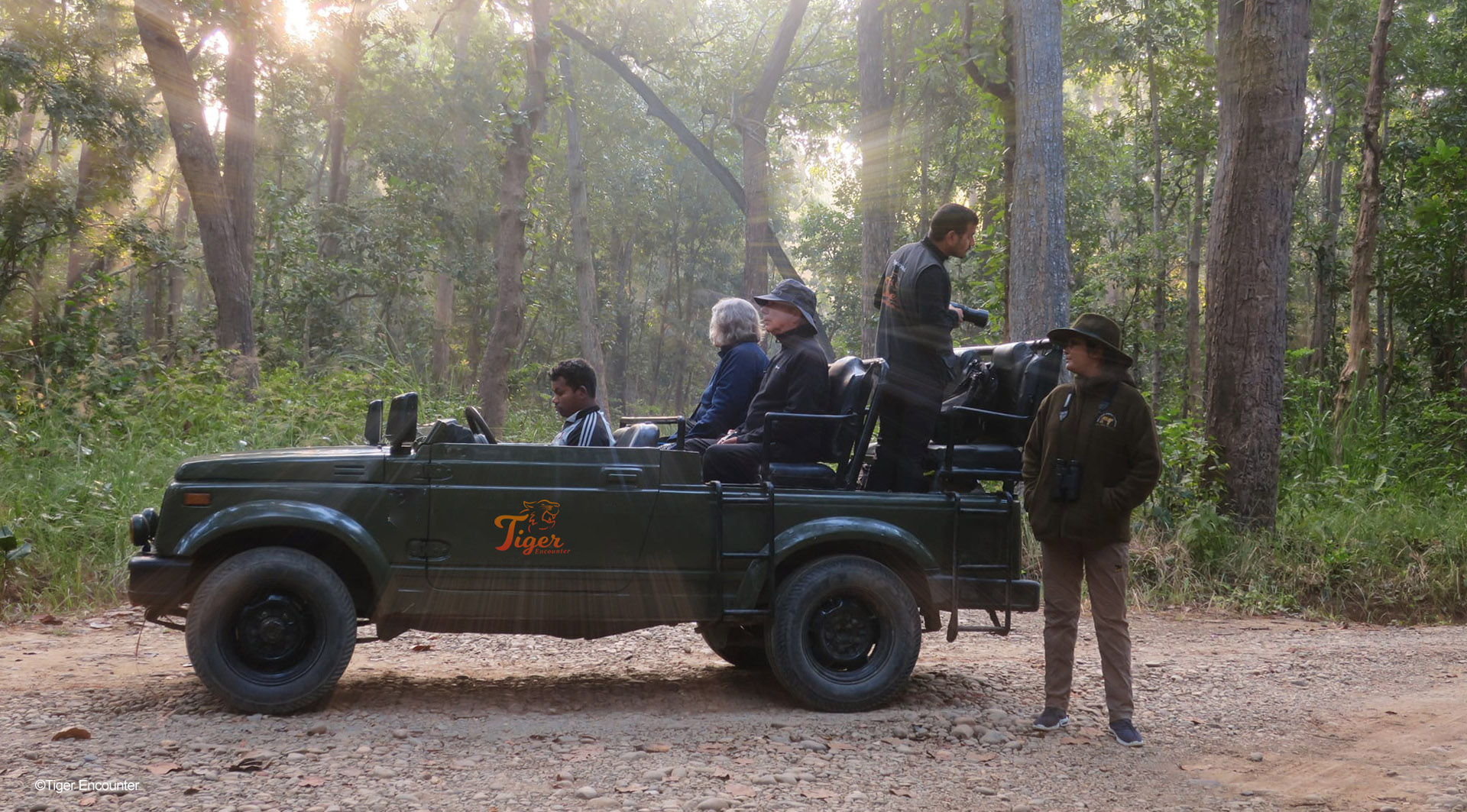
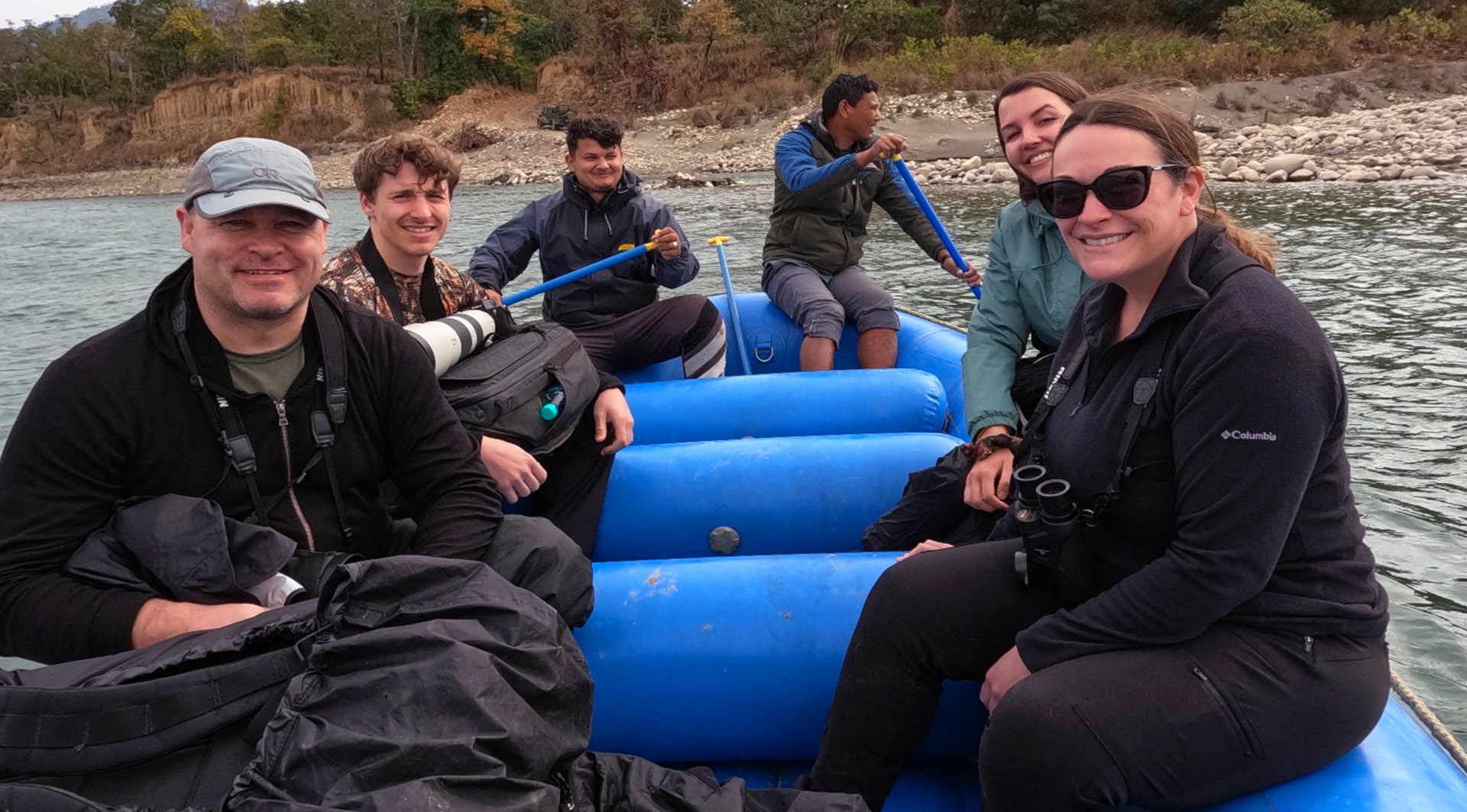
We exclusively organize private jeep safaris, walking safaris, and river rafting experiences to maximize your chances of spotting wildlife and capturing exceptional photographs. Led by expert naturalists and trackers, our activities take you deep into Bardia National Park's prime wildlife habitats, offering the best opportunities to encounter Royal Bengal Tigers, rhinos, elephants, crocodiles, and a rich variety of birdlife while also experiencing the unique culture of the local Tharu community.
How We Track Tigers in Bardia
Our main focus is the Royal Bengal Tiger, followed by other wildlife and birds. We primarily use private jeep safaris, with walking safaris and river safaris added when conditions and water levels allow.
Our experienced local trackers read tiger pugmarks, scratch marks, alarm calls, territorial signs and prey activity to identify recent tiger movement. Safari routes and timing are adjusted according to wildlife activity and season to maximize opportunities for tiger sightings.
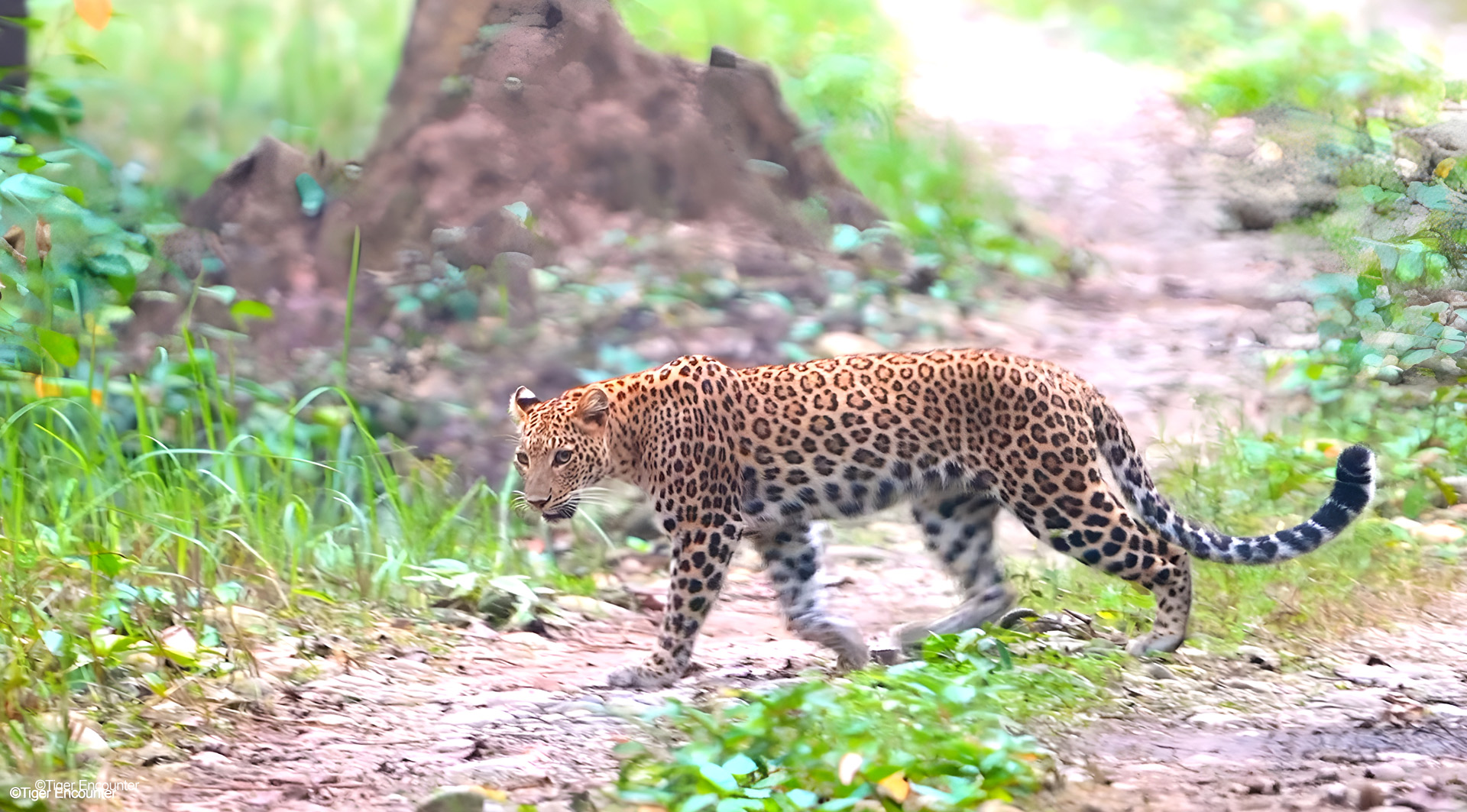
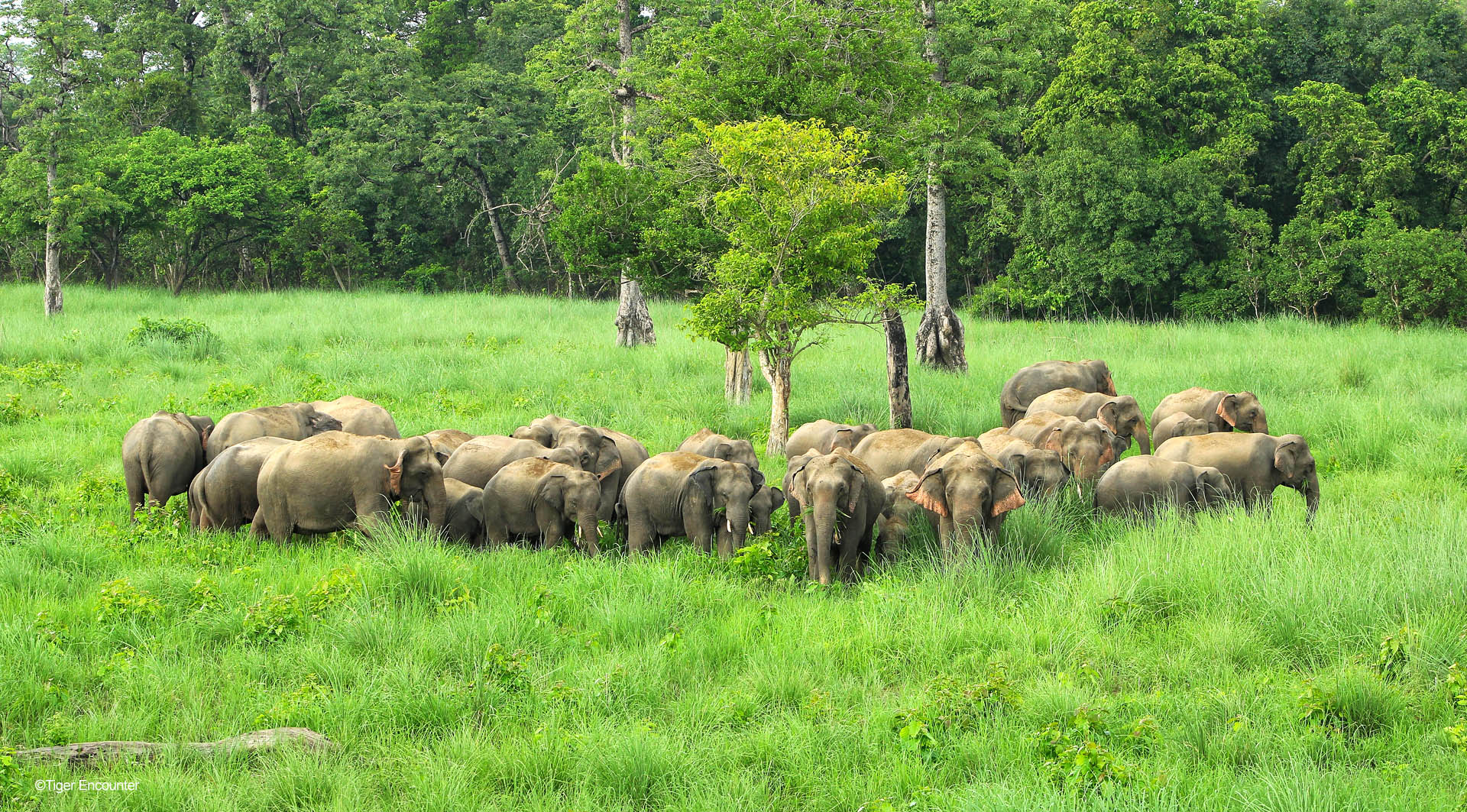
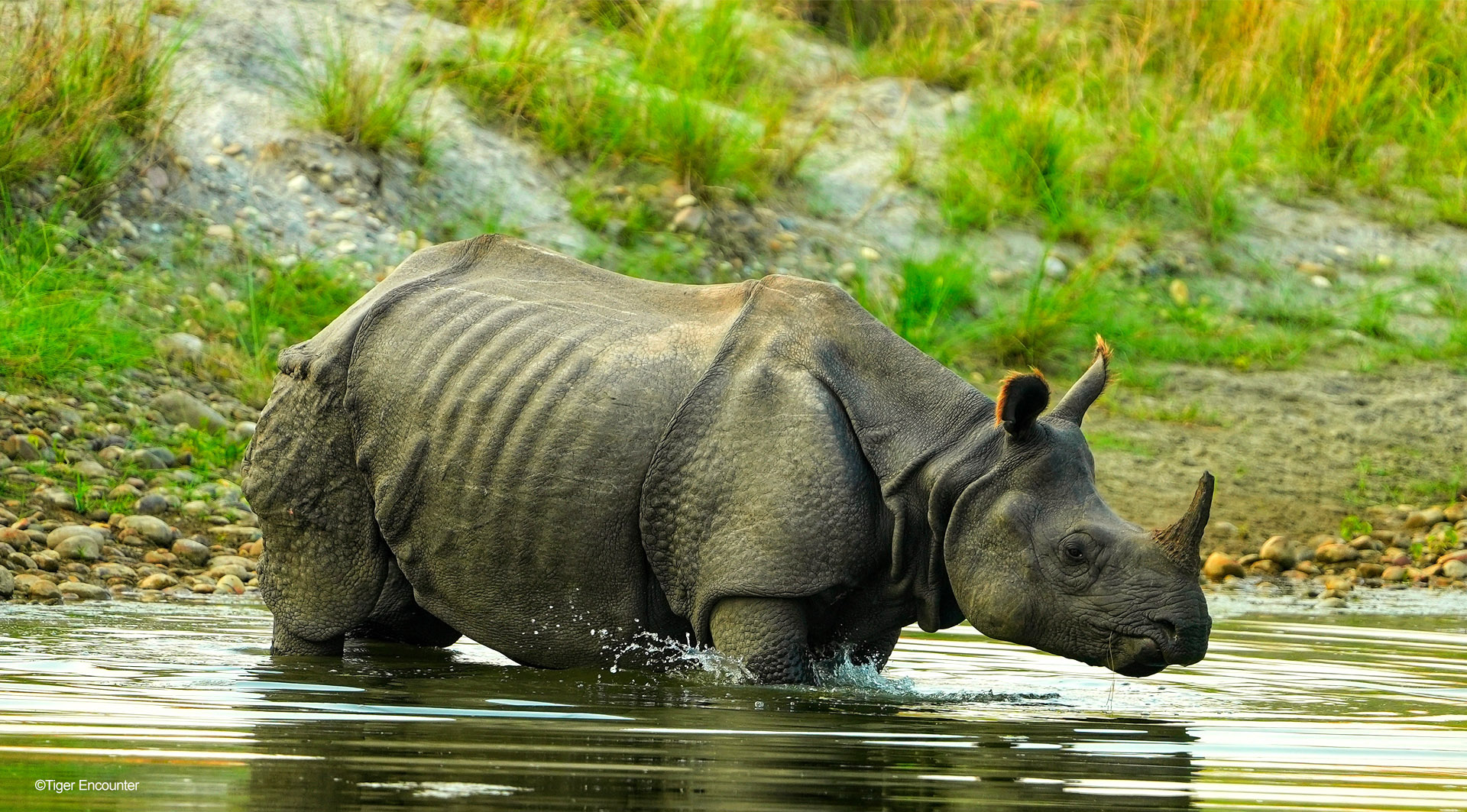
Beyond tigers, we also look for leopards, rhinos, wild elephants, deer, crocodiles and Bardia’s diverse birdlife.
The 2026 tiger population in Nepal
According to Nepal’s 2026 tiger census, Bardia National Park recorded 112 adult tigers, with the number of tiger cubs also increasing. Nepal’s total wild tiger population reached 429, highlighting the country’s growing success in tiger conservation.
Trusted by Wildlife Photographers & Filmmakers
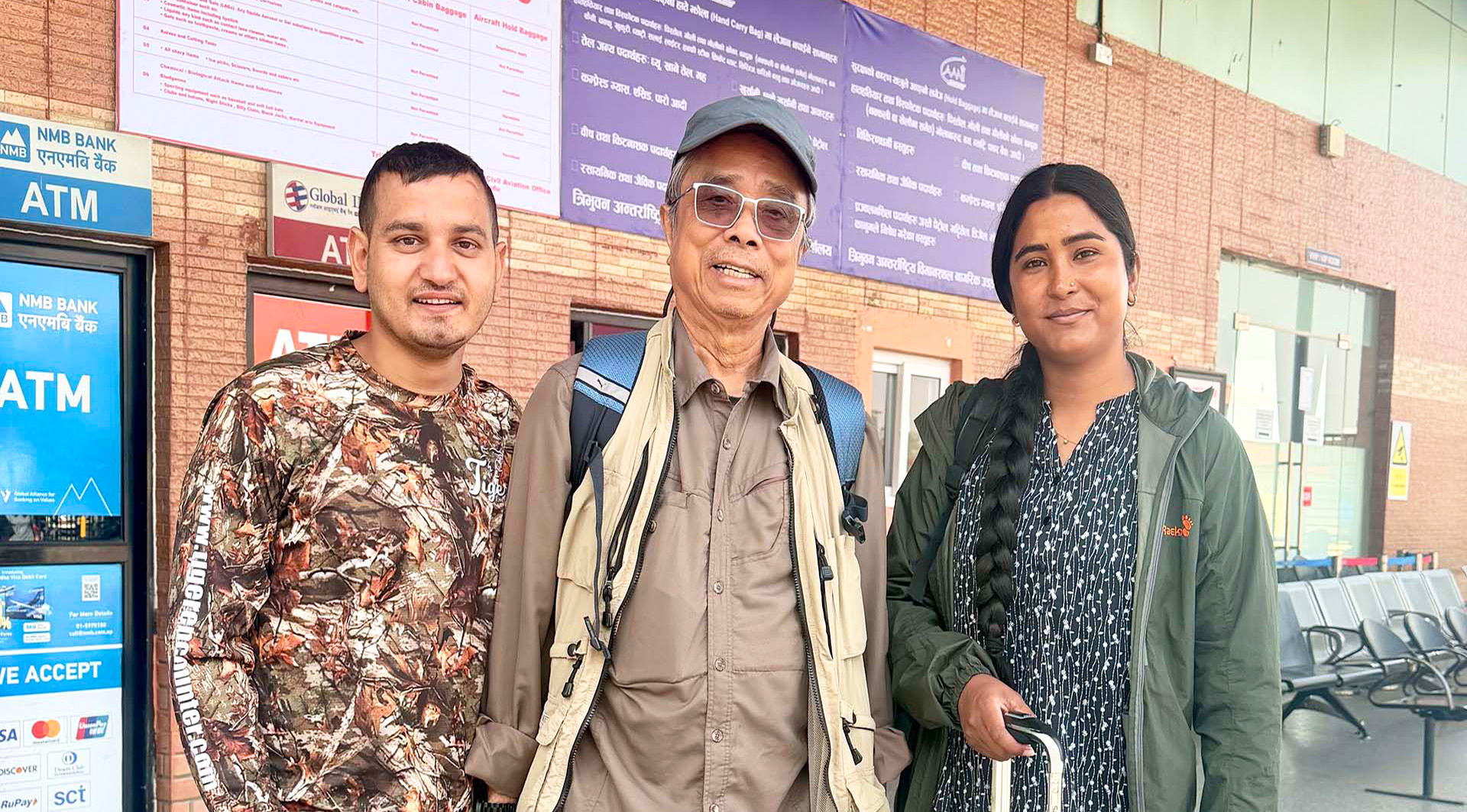
Our team has years of experience working with wildlife photographers, filmmakers and documentary teams in Bardia National Park. We have supported international productions and wildlife projects, including BBC Earth’s Tiger Island, where members of our team contributed their local knowledge and tiger-tracking expertise.
Our experience also includes working with wildlife photographers and filmmakers such as Ryan Shirley, Ly Dang, Chris Van, Florian Kriechbaumer, and many other international wildlife enthusiasts and visual storytellers.
We understand that professional wildlife photography and filming require patience, flexibility and deep knowledge of animal behaviour. Our local trackers know the forest, wildlife movements, tracks and signs, helping photographers and filmmakers spend more time in the right areas while maintaining responsible wildlife-viewing practices.
More Than a Safari — We Support Conservation
Our connection with Bardia goes beyond tourism. Our team is actively involved in wildlife conservation and protection, including:
- Camera trapping and wildlife monitoring
- Anti-poaching activities and patrolling
- Wildlife rescue and support
- Tree planting and habitat protection
- Community awareness and conservation activities
When you travel with us, you are not simply joining a safari. You are experiencing Bardia with a team that has a strong connection to its wildlife, people, and conservation efforts.
Note: Why Tiger Encounter Packages Don’t Have a Quoted Price? Click the link for more details.
If you are looking for the cost of a Tiger Encounter package, you may notice we don't publish a fixed price for every wildlife tour. This is because our tiger safaris and wildlife tracking experiences are customized according to each traveler’s interests, group size, travel dates, number of days, accommodation preferences, and wildlife goals.